Background on the Senator-elect’s statements, positions, and record on diplomacy, international assistance, and U.S. international affairs programs.
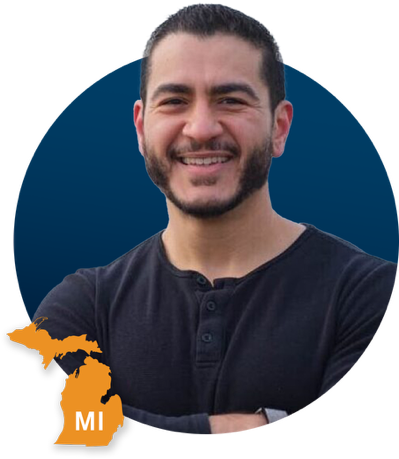
A Michigan physician and epidemiologist who has led Detroit’s health department and Wayne County’s health services, Senator-elect Abdul El-Sayed has connected America’s role in the world and foreign policy to U.S. interests here at home, stating, “Foreign policy isn’t just about what we do abroad, it’s about how what we do abroad affects us at home” describing an approach that puts “peace and diplomacy first.”
El-Sayed is a University of Michigan graduate and Rhodes Scholar. His public-service record includes working on rebuilding Detroit’s health department after the city’s bankruptcy and overseeing health services in Wayne County, home to roughly 1.8 million residents.
On U.S. global leadership and America’s role in the world:
- In a candidate forum in September 2026, El-Sayed stated, “When we think about our role in the world, we have turned ourselves into the world’s policemen. And I think what we all want, what we all need, is more democracy, more freedom in the world, but also an understanding of what we actually can and should do with respect to that.”
- He said in an October 2026 debate, “If we are willing to be the chief among equals to enforce international law we will have a more peaceful world and we will be able to actually address some of the challenges that we face.”
- In his campaign platform, he states his support for a multilateral approach to foreign affairs, “I believe in international cooperation to take on our most dire global threats, such as global pandemics and climate change.”
- In a Morning Joe interview after winning his election, El-Sayed said, “I believe in USAID because if you can stop disease from spreading and get people food, it ends up solving problems for you too.”
On U.S. national security:
- In accepting an endorsement from the group Peace Action, El-Sayed stated, “In the U.S. Senate, I will fight for an end to endless militarism and invest the money wasted by war profiteers on our schools and infrastructure here at home.”
- In a May 2026 interview, he expressed his opposition to unconditional U.S. military assistance – especially to America’s allies in the Middle East – stating, “My solution has always been that our tax dollars should not be used to fund foreign militaries. And I say that about Israel. I say that about Egypt, where my family immigrated from. I say that about Jordan. I say it about Saudi Arabia. I’m pretty consistent. And if we’re not funding foreign militaries, that includes offensive, defensive, or nuclear weapons of all sorts.”
On global health:
- As a physician and epidemiologist, he has stated in his campaign platform, “I understand that global threats can quickly become local threats… when we fail to tackle health and humanitarian threats where they present themselves abroad, they can land in our neighborhoods.” He added that “helping to diminish deprivation and disease abroad isn’t just charity, it’s important for our own safety and prosperity.”
- In his campaign platform, El-Sayed stated that he “supports reinvestment in foreign aid, including to UNRWA, and meaningful U.S. engagement in the WHO, the Conference of the Parties, and the Paris Agreement on global health and climate threats.”
- In a July 2026 interview, he said on epidemics, “If you stop them where they are, you can prevent them coming to you. And I think it’s a smart use of our tax dollars to fight epidemics elsewhere so they don’t become epidemics in New York City or Detroit or Grand Rapids or Lansing” adding that “we have an opportunity to be taking on big challenges that are going to end up at our doorstep.”
- In a 2020 podcast discussing the Ebola response, he said, “We really ought to build institutions all over the world to be able to identify, detect and respond to early outbreaks.”
- As a 24-year-old University of Michigan student, he led a medical mission to Peru and conducted health studies in Guatemala.
On global economic engagement:
- In an October 2026 interview with Meet the Press, he called for a “smart targeted tariff approach” and “clear industrial policy that’s about investing in high growth capacity job creating industries” followed by “targeted tariffs around those particular high growth areas, because, of course, a tariff is a tax that we pay to protect the jobs in an industry that we’re tariffing on.”
- In another October 2026 interview, he reinforced his views on trade and tariffs, “The era of free trade has sold us short, so we need to be thinking about smart tariff policies, not these ridiculous policies that we’ve got with trade war or Canada, but smart tariff policies that are protecting our jobs, growing more jobs, and then releasing our industrial might on the rest of the world.”
On Russia’s war in Ukraine:
- Writing after Russia’s 2022 invasion, El-Sayed argued that “in supporting Ukraine against Russian invasion – we find ourselves on the right side of justice” and described the conflict as “a war between democracy and autocracy, between self-government and fascism.”
- In a Michigan Senate primary debate, he stated why U.S. assistance to Ukraine meets his high bar for intervention: “I believe in international law. I believe we ought to be the chief among equals in upholding international law… When it comes to a situation like Ukraine, where you have a… dictator who wants… more land and violates the sovereignty of a foreign nation in their neighbor, I believe that that is justifiable intervention.”
On the global competition with China:
- In his campaign platform, El-Sayed wrote, “Our competition with China is not fated toward kinetic war. Where we compete, it should be with our research, development, and economic power, building solutions to the problems of the future.”
- His platform added that the U.S. must insist “that China play by the rules when it comes to trade and intellectual property” and that “we must also recognize that our shared futures are better when we cooperate with each other for the benefit of all of our people, rather than compete in a zero-sum arms race that makes all of us less safe.”
On conflict in the Middle East:
- On the Iran war, El-Sayed has expressed his strong opposition to the U.S. military campaign stating, “I believe in diplomacy. In fact, diplomacy is what the Obama administration had used to negotiate a scenario in Iran where we did not have proliferation of nuclear material… I do think that we can end the war and we can actually, by peaceful means, diplomatically address this challenge.”
- On the conflict between Israel and Hamas, he has been a consistent critic of the Government of Israel and foreign assistance to Israel stating, “I believe that we ought to be the principal enforcer of the international law system that we helped to architect after World War II… What that means to me is that when you have a rogue state, like the state of Israel.”
Download PDF