
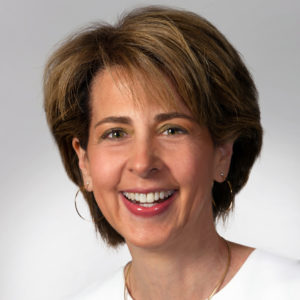
Liz serves as President & CEO of the U.S. Global Leadership Coalition (USGLC), a broad-based coalition of over 500 businesses and NGOs that advocates for strong U.S. global leadership through development and diplomacy. Under her leadership, the USGLC has grown to a nationwide network of advocates in all 50 states and boasts a bipartisan Advisory Council, which includes virtually every living former Secretary of State, and a National Security Advisory Council consisting of nearly 270 retired three and four-star generals and admirals.
Ms. Schrayer currently serves on the U.S. International Development Finance Corporation’s Development Advisory Council, USAID’s Advisory Committee on Voluntary Foreign Aid (ACFVA), as well as several advisory boards and committees for the University of Michigan, including the Ford School of Public Policy. She is also a member of the Council on Foreign Relations.
In addition to running the USGLC, Ms. Schrayer serves as President of Schrayer & Associates, Inc., a nationwide consulting firm founded in 1995, which works on a wide range of domestic and international issues.

Jason serves as Executive Director of the USGLC, tapping over 20 years of public policy, Capitol Hill, and Presidential campaign experience to oversee day-to-day operations of the nationwide coalition. Prior to rejoining the USGLC, Gross served nine years as Chief of Staff to U.S. Representative Joe Courtney of Connecticut. Gross launched Courtney’s office in the House and led the office from a razor-thin 83-vote victory in 2006 to four strong reelections and Courtney being named Congress’s 8th highest over-performing Democrat by the Cook Political Report in 2014. Previously, Gross became the USGLC’s first full-time employee in 2001 and contributed to the organization’s growth from a nascent coalition to an established organization in six years as Managing Director.
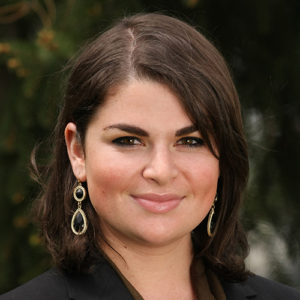
Emily serves as the Chief of Staff of the USGLC. She joined the USGLC in 2011, most recently serving as Program Director, overseeing the organization’s events and programming in DC and across the country. Prior to joining, Emily spent two years at the American Israel Public Affairs Committee managing activity for AIPAC’s top political activists, and has previous experience working at an education non-profit and on Capitol Hill. In her community life, Emily is a member of the Jewish Federations of North America’s National Young Leadership Cabinet, a premier young leadership development program that educates and connects the next generation of global Jewish leaders and philanthropists. She has served on the Board of Directors of the Jewish Federation of Greater Washington and co-chaired many programs and initiatives. Emily is a native of Louisville, KY, and received her bachelor’s degree in Political Science from the University of Michigan.

Ariana serves as the Government Relations Director of the USGLC, tapping nearly two decades of public policy, legislative and executive branch, and advocacy experience to lead the organization’s engagement with Congress and drive strategic advocacy around relevant international affairs budget and policy matters. Prior to joining USGLC, Ariana served as the Director of Senate Affairs in the Department of State’s Bureau of Legislative Affairs. In this capacity, she advised the Department on how to advance U.S. foreign policy, national security, and development priorities in Congress and managed the Department’s relationship with the U.S. Senate. Prior to joining the State Department, Ariana served as the Foreign Policy and Defense Advisor to Senator Barbara Boxer (D-CA), responsible for the Senator’s foreign policy, national security, and related appropriations portfolios. Ariana holds an undergraduate degree from Johns Hopkins University and spent a year studying at Sciences Po in Paris, France. A native of Syracuse, New York, she now lives with her husband and two kids in northern Virginia.
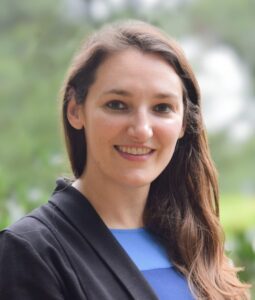
Rachel serves as the Deputy Government Relations Director of the USGLC. Rachel’s most recent professional experience was serving as Legislative Advisor for the Bureau for Europe and Eurasia at USAID. Previously, Rachel served as Special Assistant to the President at U.S. Institute of Peace, Legislative Director for Representative Conor Lamb of Pennsylvania and Legislative Assistant for Representative Michelle Lujan Grisham of New Mexico. She has experience in political campaign consulting and served as the Aide to Chambers to Supreme Court Associate Justice Ruth Bader Ginsburg. Rachel is a native of Texas and earned her Master’s Degree in Public Administration focusing on international security policy from Columbia University’s School of International and Public Affairs.
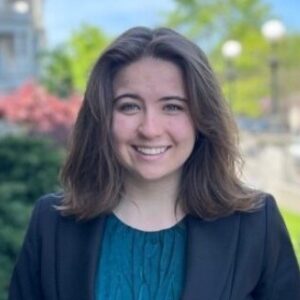
Natasha serves as the Government Relations Assistant of the USGLC. Prior, she served as Legislative Intern for the House Committee on Appropriations. Earlier, she interned for the White House Office of Political Strategy and Outreach, the Senate Committee on Foreign Relations, Library of Congress, and at the Locust Street Group. Natasha earned her bachelor’s degree in political science and international affairs from Northeastern University, where she studied abroad in the Middle East, Balkans, Scotland, and Japan. Originally from Idaho, Natasha now resides in DC and is thrilled to be working with the USGLC.
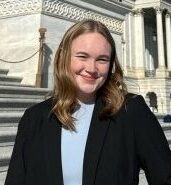
Sierra serves as the Government Relations Assistant of the USGLC. Prior to joining, she interned in the office of Representative Veronica Escobar of Texas and Chicago nonprofit Forging Opportunities for Refugees in America (FORA). Sierra is a graduate of Loyola University Chicago, where she earned her bachelor’s in political science, as well as minors in religious studies and multimedia journalism, and spent a semester in DC studying political advocacy and communications. Originally from Austin, Texas, Sierra is thrilled to be back in Washington, DC and working with the USGLC.
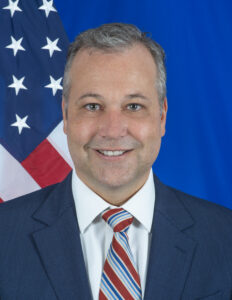
Jim Richardson serves as the National Outreach Director at the U.S. Global Leadership Coalition (USGLC), bringing 25 years of experience in U.S. national security, foreign policy, and congressional operations. He previously served as Chief of Staff and Chief Operating Officer to the 70th Secretary of State, Mike Pompeo, where he directed operations across multiple global entities and served as Executive Chairman of The Pompeo Foundation. Prior to his time at the State Department, Jim was the Director of the Office of Foreign Assistance, serving as the Secretary’s principal adviser on a $35 billion global investment portfolio across 120 countries. Notably, he directed the $1.6 billion “America’s Response to Outbreaks” framework during the COVID-19 pandemic. Jim also led large-scale organizational change as the Transformation Coordinator at USAID, re-architecting nearly 100 country strategies. His extensive legislative background includes serving as Chief of Staff to then-Congressman Mike Pompeo and holding senior roles with Members on the House Defense Appropriations Subcommittee and the Senate Foreign Relations Committee. Jim holds a Master of Science from Missouri State University and a Bachelor of Science from Evangel University, and is a graduate of the U.S. Air Force Air Command and Staff College.
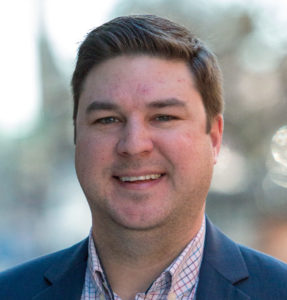
Jeremy serves as Deputy National Outreach Director of the USGLC, where he helps lead nationwide outreach and advocacy efforts. He works with business, nonprofit, faith, agriculture, and state and local leaders to advance strong American leadership globally through strategic investments in U.S. international affairs programs. Over the past decade at USGLC, Jeremy has held several roles across the organization, contributing to the growth and execution of its national, bipartisan engagement strategy. He brings more than 15 years of experience in public affairs, politics, and coalition building, working with Members of Congress and their staff, as well as diverse stakeholders nationwide. Prior to joining USGLC, Jeremy worked for two U.S. Senators, focusing on constituent outreach, public engagement, and policy initiatives. He also has experience in federal campaigns. Jeremy is a graduate of Clemson University, where he served as Governmental Affairs Director and advocated on behalf of the undergraduate student body. He is a native of Greenville, SC and is a proud husband and father to two young daughters.

Carey serves as the Outreach Director for the South Region of the USGLC. Prior to rejoining USGLC, Carey worked to address domestic hunger issues during the pandemic. She has served as Chief of Staff to the South Carolina House of Representatives Deputy Minority Leader James Smith, where she oversaw all political and legislative priorities. Her experience also includes serving as South Carolina Deputy Political Director for the Hillary for President campaign during the 2008 primaries and a former lobbyist for a South Carolina education organization. Carey has worked on numerous political campaigns at the local, state, and presidential level overseeing field, fundraising, and policy development. She graduated with honors from the University of South Carolina, where she focused on political science. She is a native of Decatur, AL and spent several years in Nashville, TN.

Sara serves as the Outreach Director for the Central Region of the USGLC. Prior to joining, Sara worked for the Iowa Catholic Conference as both Associate and Executive Director. She also spent ten years working for MercyOne Health System in Iowa, where she led the Government Relations work and served as Vice President of Community Health, where she developed system-wide efforts to address social determinants of health in communities across Iowa. Previously, Sara worked for the Iowa Senate as majority leader and on several state and national political campaigns. Sara holds a Master of Public Administration from Drake University and a Bachelor’s degree in Political Science and Communications from the University of Iowa. A native of Iowa, Sara has previously lived in Ecuador and Guatemala and currently resides in West Des Moines.
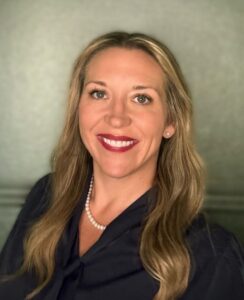
China serves as the Western Region Outreach Director of the USGLC. China brings more than two decades of experience building coalitions and advancing policy initiatives across the government, nonprofit, and community sectors. She has helped guide campaigns at the presidential, congressional, and gubernatorial levels. Prior to joining USGLC, she served as President of Inside Baseball Public Affairs, where she advised organizations and leaders on strategic planning and external relations and helped establish the Idaho STEM Action Center in the Governor’s Office. China earned a bachelor’s degree from Boise State University and serves on the Boise State Alumni Association Board of Directors. She and her husband, Jeremy, are the proud parents of two college-aged sons. Outside of work, China enjoys taking classes to develop new skills and is a devoted Boise State football fan.

Kiersten serves as the Outreach Director for Texas–Colorado–New Mexico of the USGLC. Prior to joining, Kiersten served as Director of Programs at the World Affairs Council of Dallas/Fort Worth, designing and coordinating public speaking engagements to educate the North Texas community on global issues. She first joined the Council’s staff in 2018 following an internship with the programs department. A Dallas area native, Kiersten attended Louisiana State University where she earned her Bachelor of Arts in political science and international relations, with a minor in religious studies. While in school, Kiersten studied abroad in Morocco and focused her studies on the Arabic language and women in world religions. She was a proud member of The Golden Band From Tigerland and is an alumni member of Kappa Kappa Psi and Sigma Alpha Iota. Kiersten is currently based in Dallas, TX.

Eric serves as the Outreach Director for the Heartland Region of the USGLC. Prior to joining, Eric served as Deputy Canvass Director for the Grassroots Team’s DC office, fundraising on behalf of Amnesty International. Previously, Eric interned for a U.S. Senator’s state operation and served as a Catholic Community Connection fellow for the Society of St. Vincent de Paul. Earlier, Eric worked as a political campaign coordinator for a Cleveland City Council candidate and as the executive assistant for an Ohio gubernatorial campaign. A native of Northeast Ohio, Eric earned his Bachelor of Arts degree in history from Notre Dame College, where he served as the college student representative to the Propel Ohio Collegiate Leadership Summit and was a 2-time conference champion for the college’s track and field team. Eric is a proud Cleveland sports fan and excited to manage outreach efforts in the Ohio Valley.
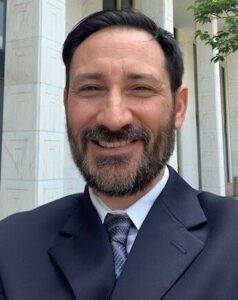
Adam serves as the Director of Veteran Outreach of the USGLC. An Air Force veteran, Adam served as a C-130 navigator stationed at Pope AFB in North Carolina and Yokota Air Base, Japan. Prior to joining, he served as Director of Policy and Engagement for the North Carolina Justice Center, advocating for consumer protections and tenants’ rights. At the non-profit, Adam built a strategic alliance with the North Carolina chapter of the Veterans of Foreign Wars to expand health care coverage statewide. Earlier, Adam worked for the North Carolina Pediatric Society in support of a statewide initiative to improve health care for children in the foster system. Adam holds a Bachelor’s degree from the U.S. Air Force Academy and a Master’s in Public Administration from North Carolina State University. He resides in Raleigh, NC with his family.
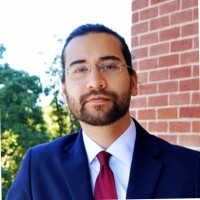
Derry serves as Outreach Manager for the Northeast Region of the USGLC. Derry brings grasstops engagement experience from Social Current, where he worked as Field Mobilization Manager with a nationwide network advocating for legislation beneficial to nonprofits. Previously, he ran grassroots field operations for presidential and Senate-level campaigns over multiple cycles, including the Clinton campaign in 2016. He holds a master’s in public administration from Syracuse University and a bachelor’s degree in politics and religion from Oberlin College. Derry is proud of his Australian-Cambodian American heritage and is often found continent-hopping to visit family in Europe, Southeast Asia, and Australia. He currently resides in Philadelphia with his wife.

Rose serves as the Outreach Manager for the Farmers for Prosperity of the USGLC. Prior to joining, Rose worked with the Organization of American States (OAS) in the Department for Social Inclusion. Prior to her time at the OAS, Rose was an English teacher for three years in Madrid, Spain, where she also earned a master’s degree in international relations from Instituto de Empresa (IE University). A native of Massachusetts, Rose received a bachelor’s degree in political science and sociology from Simmons University in Boston. She is thrilled to continue assisting in outreach efforts for USGLC.

Liza serves as the National Engagement and Special Projects Manager of the USGLC. Prior to joining, she graduated from Kenyon College, where she majored in Anthropology with concentrations in African Diaspora Studies and Women’s & Gender Studies. Building on her interest in international relations and her passion for human rights advocacy, Liza spent time abroad in Copenhagen studying international human rights law, transnational human trafficking, and modern-day slavery. Originally from Chevy-Chase, Maryland, Liza is now based in Washington, D.C., and excited to be working with the USGLC.
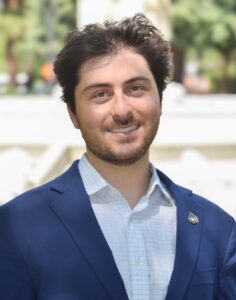
James serves as an Outreach Assistant for the Heartland Region of the USGLC. Prior to joining, James interned in the offices of Representative Trey Gowdy and Senator Tim Scott, both of South Carolina. He is a recent graduate from American University, with a major in International Service, focused on global health and conflict resolution. James also studied in Madrid, Spain furthering his comparative analysis of Western European vs. U.S. health systems. James is originally from Greenville, South Carolina.

Josh serves as Director of Communications of the USGLC. Prior to joining, Josh was at the State Department as Senior Advisor and Speechwriter to Acting Deputy Secretary Victoria Nuland and Under Secretary John Bass—managing strategic communications to articulate and amplify the Department’s global efforts to advance the security, prosperity, and values of the American people. Earlier, Josh served for more than a decade in policymaking circles at the Department of Defense and on Capitol Hill, including as Chief of Staff for Congresswoman Lois Frankel, and as the Middle East Subcommittee Staff Director under Congressman Ted Deutch. Josh holds an undergraduate degree from the University of Michigan and a master’s degree from the Harvard Kennedy School. A native Michigander, Josh and his wife, Kelly, now live with their son in Washington, DC.
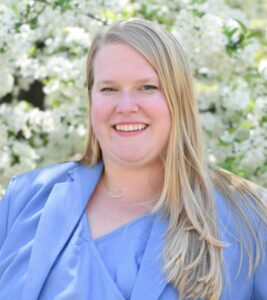
Martha serves as Deputy Communications Director of the USGLC. Previously, Martha led USAID’s strategic communications team at the U.S. Embassy in New Delhi, overseeing programs across South Asia and leading communications for the Mission’s COVID-19 emergency response. Earlier, as Congressional and Press Advisor in the State Department’s Office of Foreign Assistance, she managed the rollout of the President’s Budget Request and subsequent funding announcements. Her earlier experience includes serving as a Legislative Assistant for Representative Mark Meadows of North Carolina, as a Staff Assistant for Representative Bob Dold of Illinois, and as an English teacher in South Korea. A native of the Chicago suburbs, Martha earned a Master’s in International Commerce and Policy from George Mason University and a Bachelor’s in Government and Politics from the University of Maryland. Martha is looking forward to moving back to Washington, D.C., where you’ll find her trying new restaurants or making seasonal bouquets at the farmer’s market.
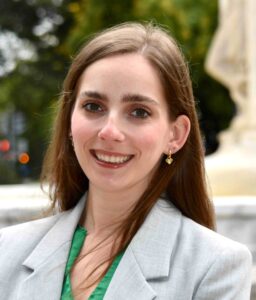
Kelsey serves as the Communications and Press Manager. Previously, Kelsey led the Virginia Democratic Party’s communications team in Richmond during the 2024 and 2025 election cycles. Prior to that role, she served as a Communications Officer at the International Foundation for Electoral Systems (IFES), where she helped manage the organization’s media relations and storytelling strategies, advancing the mission of strengthening democracies worldwide. She started her career as a political reporter at The Hill, co-authoring a daily newsletter about Congress and the White House, and held fellowships as a Washington correspondent for the Texas Tribune and Durango Herald. A native of Philadelphia, Kelsey earned a Bachelor’s degree in Journalism and Political Science from American University in Washington, D.C. If she is working from home, her cat Toki will also probably be reading your email.

Abby serves as the Digital Communications Manager of the USGLC. Abby is a purpose-driven communicator with experience advancing U.S. foreign assistance and global policy initiatives. Prior to joining USGLC, Abby led strategic communications for the USAID Cooperative Development Program to strengthen cooperatives in over 20 countries. Prior, she served as Social Media Manager with the Environmental Change and Security Program at the Woodrow Wilson International Center for Scholars. Abby has also consulted on aquaculture’s connection to economic development at the UN Conference on Trade and Development and for the inaugural UN Food Systems Summit. A native of Virginia, Abby earned her master’s in international affairs from George Washington University and her bachelor’s in political science from Virginia Commonwealth University. You’ll find Abby sipping matcha, cooking nostalgic Filipino recipes, hanging outside with her senior black lab, or planning her next trip somewhere with the ocean and palm trees.
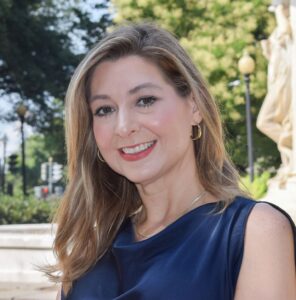
Megan serves as the Data/CRM Senior Manager of the USGLC. She has over 14 years of experience in marketing, including six in database analytics and CRM Strategy. Prior to joining, Megan served as the Manager of CRM Strategy with PENN Entertainment, Inc. There, she established and managed the CRM strategy of eight casinos throughout the northeast. Additionally, she worked as a Membership Marketing Specialist for the AAA Club Alliance in Wilmington, DE where she helped grow their membership base and create new marketing efforts. Originally from Delaware, Megan earned her B.S. in Marketing from Wilmington University. She now calls Reston, VA her home where she lives with her family.

Feiras serves as the Data and Digital Marketing Associate of the USGLC. Prior to joining, Feiras worked at Project Sunshine, a nonprofit that provides developmental support to pediatric patients. There, he spearheaded their email marketing and website restructuring in efforts to establish a more efficient system that helped boost lead generation and overall brand recognition. Previously, he was a consultant at the United Nations Capital Development Fund where he supported the development of a framework for the integrated appraisal of municipal waste management projects. Feiras earned his Master’s degree in International Development and Nonprofit Management from New York University and received his Bachelor’s degree in Communications and Economics from American University. Feiras’ upbringing as a third culture child involved growing up in five diverse countries across Asia, Africa, Europe, and Latin America.
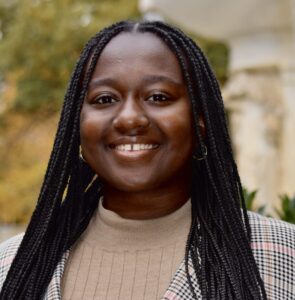
Kamsi serves as the Communications Assistant of the USGLC. Previously, Kamsi was a policy and advocacy intern at Mercy Corps, where she supported the organization’s engagement with Congress on international development. She also interned at Eurasia Group’s Institute for Global Affairs and The Carter Center. Kamsi earned her bachelor’s degree in Political Science with a minor in Economics from Emory University. A native of Washington, DC, Kamsi is excited to contribute to the USGLC’s mission.

Emily serves as Program Director of the USGLC, overseeing the strategy and implementation of the numerous events hosted by the organization each year in Washington, DC, and around the country. Prior to joining, Emily graduated from American University, where she received her bachelor’s degree in International Relations, with a focus on U.S. foreign policy, national security, and the Russian language, which included a semester spent living in St. Petersburg, Russia. A native of Burlington, Vermont, Emily has lived and worked in the DC area for over 15 years and currently resides in Northern Virginia with her husband and their young children – a son and twin daughters.
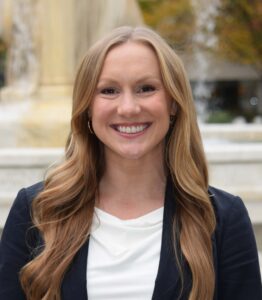
Brynn serves as Deputy Program Director at the USGLC. Prior to joining, she held a variety of positions at nonprofits in Philadelphia, where she spearheaded girls leadership programs for Women’s Campaign International and directed development and communications at Philadelphia Legal Assistance. Brynn was a recipient of the Citizen Action Diplomacy Fund and the Mandela Washington Fellowship Reciprocal Exchange for her work in Kenya and Malawi, and served on the inaugural delegation of Young American NGO Leaders to Taiwan. Brynn holds a Bachelor’s degree in International Relations from Roanoke College and a certificate in Nonprofit Ascending Leadership from Bryn Mawr College. A New Jersey native, Brynn is now happy to call Washington, D.C. her home.

Brenden serves as the Outreach and Programs Assistant of the USGLC. Prior to joining, he held a position as an Immigration Advisor for Arizona State University, managing F-1, J-1, and H-1B visas for the international student population. Brenden was also the Graduate Fellow Intern for the Phoenix Committee on Foreign Relations, assisting in the implementation of events, policy research, and data management. He holds a Bachelor’s of Public Service and Public Policy along with a Master’s of International Affairs and Leadership, both from Arizona State University. This has afforded him the opportunity to study abroad in Morocco learning Arabic and is the recipient of the Arizona World Innovators Study Abroad and Internship Scholarship from the ASU Leadership, Diplomacy, and National Security Lab, spending months studying and working in Amman, Jordan. Although a Washington State native, Brenden is excited to be in Washington D.C. and be a part of the USGLC mission.

Richard serves as the Senior Policy Advisor of the USGLC, returning to the organization after previously serving as the Communications Director. He is a seasoned public relations, advocacy, and policy executive with managerial experience at the global, federal, and state levels and knowledge of the private and non-profit sectors. He is a Principal at RAMP Solutions and formerly served as the Vice President of External Affairs at both Food for the Hungry and Project Concern International. He was unanimously confirmed by the U.S. Senate as the Assistant Administrator for the Bureau of Legislative & Public Affairs at the U.S. Agency for International Development.
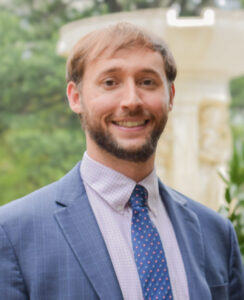
Tom serves as the Deputy Policy Director of the USGLC. He previously served at USAID from 2020-2025, including as acting deputy for USAID’s New Partnerships Initiative, a reform effort launched under Administrator Mark Green to strengthen the Agency’s external collaborations. Prior, Tom handled Congressional reporting at the Defense Security Cooperation Agency and worked for U.S. Representative Randy Hultgren of Illinois. Tom has been involved in organizations dedicated to democratic values and internationalism, including the Institute on Religion & Democracy and the International Churchill Society. Originally hailing from suburban Chicago, Tom earned degrees from Wheaton College (IL) and the University of Chicago. When not working, he enjoys volunteering through his church, making pilgrimages to the UK, and exploring local history.
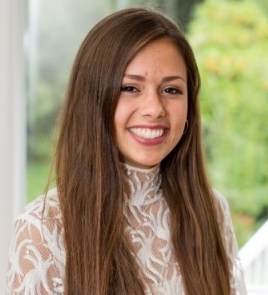
Julia serves as the Democracy and Security Fellow of the USGLC. Prior to joining, Julia served as a Senior Program Coordinator at the McCain Institute, where she managed the Ukraine portfolio. Previously, she worked for the House Foreign Affairs Subcommittee on Europe, Energy, the Environment, and Cyber, liaising with government agencies, foreign embassies, and interest groups to develop legislation. Julia earned a MPhil in Russian and East European Studies from the University of Oxford, where she was the vice president of the Ukrainian Society, and B.A. in government from Georgetown University. She is proud of her advanced-level Ukrainian language proficiency and enjoys practicing yoga in her free time.

Olivia serves as a Policy Assistant at the USGLC. Prior to joining, she graduated from the University of Georgia, where she earned her Bachelor’s degree in International Affairs and Economics. Olivia most recently served as a French language intern for the State Department’s Bureau of Political-Military Affairs, where she contributed to the Bureau’s policy work for security partnerships. Earlier, Olivia consulted for a Georgia county’s economic development team and interned at an international human rights organization. Olivia is excited to make the move to DC and join the USGLC team.

Alex serves as a Policy and Government Relations Assistant. Prior to joining, Alex interned for the European Division of the Library of Congress and in the Washington office of Congresswoman Rosa DeLauro (CT-03). Alex also lived in Paris, France where he participated in a year-long teaching exchange at Paris-East Créteil University, instructing undergraduate courses for the English Department and master’s courses for the Public and Political Communication Department. Alex is a proud graduate of Wesleyan University (CT) where he majored in Government and French Studies and competed as a distance swimmer on the varsity swim team for all four years. A native of the D.C. metro area, Alex is thrilled to be back and working to support the mission of USGLC.
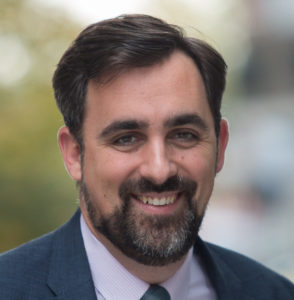
Sidney serves as Senior Director for Policy and Strategy of the USGLC. Prior to joining, Sidney gained over a decade of experience in communications, policy and advocacy in the US, Europe, Asia and Africa. He most recently led the national press outreach and digital campaign efforts on immigration and refugee issues for Church World Service’s DC office. Prior to returning to DC, he worked in the international humanitarian and development sector in Geneva with the ACT Alliance, after which he was based in Afghanistan, Pakistan and Thailand with Church World Service. A DC native, Sidney received his undergraduate degree from American University and more recently earned his Master’s in international peace and security from the War Studies Department at King’s College London.

Dana serves as the Director of Development and Strategic Partnerships of the USGLC. She joined the USGLC in 2016, with over a decade of non-profit management experience, and currently leads the organization’s fundraising, partnership building, and external engagement efforts. Most recently, Dana served as a managing consultant for then-Governor Nikki Haley’s One South Carolina Flood Fund, where she developed the protocol to manage and distribute funding to disaster relief organizations.

Haniz serves as a Senior Development Manager of the USGLC. Prior to joining, Haniz graduated from the University of South Carolina with a degree in International Relations. She served as the Executive Director for the World Affairs Council Columbia, SC chapter where she also managed the sister city relationships for the City of Columbia. She also became involved in the Somali Bantu Refugee Program where she was responsible for over a dozen refugees and their integration into US society. After several years Haniz moved to Doha, Qatar where she directed INJAZ Qatar, an NGO that focuses on youth development, financial literacy, and entrepreneurship. A dedicated volunteer, she has over ten years of supporting, building, and giving back to the local Northern Virginia community for boards, schools, and political efforts where her three children attend school. Prior to joining USGLC as a senior development manager, she served as a consultant for USGLC for over a year.
Kenny serves as the Deputy Director of Development of the USGLC. He focuses on recruiting and engaging member companies and organizations and corporate foundations. Prior to joining USGLC, he served at the U.S. Agency for International Development most recently as a Ukraine Desk Officer and earlier in co-leading the launch of promoting partnerships with the philanthropic sector. Previously, Kenny worked on the donor team at a global education nonprofit and with the international practice of a lobbying firm. Kenny earned a bachelor’s degree from the University of North Carolina and a master’s degree from the Johns Hopkins School of Advanced International Studies. Kenny resides in Northern Virginia with his wife and two sons.
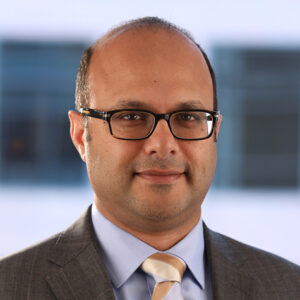
Dular serves as the Chief Financial Officer at the USGLC and is responsible for the organization’s finances, accounting, human resources, technology, contracts, and administration. Prior to joining, Dular was the CFO for Optica (formerly The Optical Society) where he led finance and customer service departments. For over twenty-five years, Dular has served as a trusted business partner and advisor for not-for-profit entities to strategically align finances and operations to maximize the impact of key programs and initiatives. Prior to returning to the not-for-profit sector, as an entrepreneur, Dular worked with farmers around the world to introduce sustainable organic agricultural products to the US and EU markets. Dular lives with his wife and two children in Washington, DC.
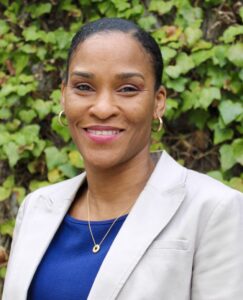
Grace serves as Senior Human Resources Business Partner of the USGLC. Prior to joining, Grace served as the HR Manager for a private regional professional services firm, the Calibre CPA Group. Her background in HR management includes leadership, benefits administration, process improvements, and employee relations. Grace earned her bachelor’s degree in human resources management from Baruch College, City University of New York (CUNY). She also holds the SHRM Certified Professional credential. Grace is originally from the island of Jamaica and now considers the DC area her home.
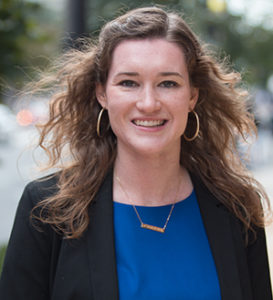
Sarah serves as the Finance Manager of the USGLC, returning to the organization after previously serving as the Finance and Administration Manager. Sarah is excited to rejoin the USGLC team after living abroad in France, where she immersed herself in the culture, traveled around Europe, and worked as a Contractor for U.S. companies. She holds a master’s degree in political science with a concentration in environmental politics and policy analysis from Appalachian State University. During her graduate studies, Sarah completed internships with the U.S. Environmental Protection Agency’s Water Infrastructure and Resiliency Finance Center and Genworth Financial. She previously worked at Emily’s List and M+R Strategic Services in various operational roles. Sarah resides in Raleigh, NC.
Get the latest news, advocacy, and event updates from the USGLC
© 2026 U.S. Global Leadership Coalition | Privacy Policy


